

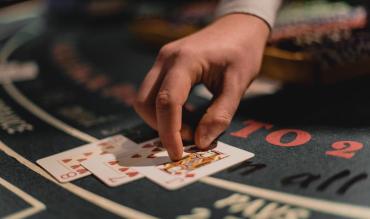

Twenty-One Plus Three (21+3) is a popular add-on to blackjack side bet that pays when your first two cards and the dealer’s up-card form poker-style combinations like flushes, straights, and three of a kind. This guide explains how 21+3 works, what the payouts and house edge look like, and why most “beat the side bet” ideas are more theoretical than practical.
21+3 uses your two cards plus the dealer’s up-card and grades them using three-card poker-style hand rankings.
In terms of value, 21+3 is usually a negative-expectation side bet; the house edge depends heavily on the pay table and the number of decks.
Even with advanced analysis, any small edge that appears in theory is rare, hard to execute in real time, and offers limited returns for most players.
Who This Guide Is For—and Who It Isn’t
This guide is for readers who want a clear, math-based explanation of 21+3—especially how the pay table drives the long-run cost of the wager. It is not a “guaranteed profit” blueprint, and it does not claim you can control outcomes.
Short-term streaks don’t change probabilities; clusters of wins or losses occur by chance, and betting systems never remove the house edge.
What Is the 21+3 Blackjack Side Bet?
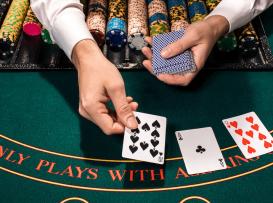
You place the 21+3 wager before the cards are dealt, usually in a marked side-bet circle on the blackjack table. The 21+3 result is determined immediately using only three cards: your first two cards plus the dealer’s up-card. In practice, the 21+3 rules are simple: your two cards plus the dealer upcard form a three-card hand.
Those three cards are evaluated using three-card poker-style hand rankings. That means you’re typically rooting for a flush, straight, three of a kind, or straight flush.
Key point for clarity: 21+3 ignores everything that happens after the initial deal. Hitting, standing, doubling down, and splitting do not change the 21+3 result, because the side bet is already determined by the first three cards.
21+3 Payouts Explained: Pay Table and Examples
Casinos can offer different 21+3 pay tables, and the pay table is the single biggest driver of the house edge. Before you take any “house edge” number at face value, match it to the pay table and the number of decks on the table you’re playing.
A common table pays 5/10/25/40/100 for flush/straight/trips/straight flush/suited trips (multi-deck only). Reduced pay tables exist (sometimes without suited trips), and related variants like Top 3 or progressive “Extreme” versions can change the math—so always read the posted pay table.
Here are common three-card outcomes used for 21+3 (Ace can count high or low for straights):
- Flush (same suit) — example: 3♥, 7♥, J♥
- Straight (consecutive ranks) — example: A♠, 2♥, 3♦
- Three of a kind (same rank) — example: K♥, K♠, K♣
- Straight flush (straight + same suit) — example: Q♣, K♣, A♣
- Suited three of a kind (same rank and same suit; multi-deck only) — example: three 9♦ cards from different decks
21+3 Odds Chart
| Winning hand | Typical payout (example pay table) |
| Flush | 5 to 1 |
| Straight | 10 to 1 |
| Three of a Kind | 25 to 1 |
| Straight Flush | 40 to 1 |
| Suited Three of a Kind | 100 to 1 |
The pay table matters because payouts are not the same thing as probability. A 9-to-1 pay table, for example, requires a win rate above 10% just to break even—because you lose 1 unit most hands, and you win 9 units only when you hit a qualifying hand.
21+3 House Edge and Volatility Explained
In simple terms, the 21+3 side bet trades a higher house edge than the main blackjack hand for occasional bigger payouts and a much more volatile bankroll.
A good check on any 21+3 pay table is to compare how often hands hit with how much they pay. If a wager pays 5-to-1 but wins far less than one time in six, the casino keeps a share of every bet on average—that share is the house edge.
| Payout odds (e.g., 5 to 1, 9 to 1) | Break-even hit rate for that payout |
| 5 to 1 | 16.67% |
| 10 to 1 | 9.09% |
| 25 to 1 | 3.85% |
| 40 to 1 | 2.44% |
| 100 to 1 | 0.99% |
Two ideas explain most of how 21+3 feels to play: house edge and volatility.
House edge is the long-run expected loss as a percentage of each wager, assuming perfect, consistent play.
Volatility describes how swingy results feel from session to session because wins are relatively infrequent and payouts come in lumpy bursts.
Independent analyses show that the 21+3 house edge on common 9-to-1 style pay tables generally sits several percentage points above the edge on the main blackjack game. Some modern variations push it over 10%, so it is vital to check the posted pay table and deck setup.
The table below compares the 21+3 side bet with the main blackjack hand and with more extreme jackpot-style variants in terms of house edge and feel at the table.
| Game feature | Approximate house edge | Win frequency and volatility |
| 21+3 side bet (common 9:1‑style pay table) | Around 3–4% against the player | Lower hit frequency than the main hand; high volatility with occasional big payouts |
| Main blackjack hand (no side bets, basic strategy) | Roughly 0.5–1% against the player on good rules | Much higher hit frequency; smoother swings compared with 21+3 |
| 21+3 progressive or extreme jackpot variants | Often above 10% against the player | Very low hit frequency; very high volatility and long losing stretches |
Top Math Tips: Why Suit Imbalance Matters
From a math point of view, 21+3 is slightly sensitive to how many cards of each suit remain in the shoe: if one suit is unusually rich, flush and straight-flush hands become marginally more likely. However, the change in probability is small, and the situations where it matters are rare.
In live casino conditions, tracking suit counts accurately enough to benefit from this effect is extremely difficult, which is why most players should treat suit imbalance as a theoretical detail rather than a usable blackjack strategy.
Card Counting in 21+3: Concept, Limits, and Simulation Results
This section looks at what happens when analysts apply card counting-style thinking to 21+3, and why any theoretical edge that appears in models is much harder to capture than in regular blackjack.
How to Read 21+3 Simulation Numbers: Edge, Units, and Variance
Here, an “edge” means the average gain or loss on the 21+3 bet over many hands, expressed as a percentage of the stake. A +1% edge would mean winning one cent on average for every dollar wagered over a very large sample, not on any single hand.
Basic 21+3 Card Counting Concept
To use suit imbalance, an advantage player would track how many cards of each suit have been dealt and convert that into a running and true count relative to the cards remaining. The idea is to bet more when the remaining shoe is richer in suited combinations.
Practical Limitations
In practice, this is where expectations need to reset. Tracking suits accurately while playing, keeping separate counts, coping with table speed, and dealing with shallow shoe penetration or casino countermeasures makes this style of play unrealistic for most players.
Large-Scale 21+3 Simulation Results
One large simulation of many six-deck shoes dealt close to the cut card found that situations where the model showed a player edge on 21+3 did occur, but they were infrequent, and even in those windows the average edge was only in the low-to-mid single digits.
Variance Within the Shoe: How Often Does the Edge Flip?
Here you’ll see how the apparent edge on 21+3 can fluctuate temporarily inside a shoe and why those swings are too unstable to rely on in real play.
A natural follow‑up question is whether there are “good” or “bad” stretches inside a shoe where the 21+3 side bet temporarily favors the player. One simulation shuffled a large number of shoes and measured the 21+3 edge at a fixed point late in the shoe. On average the result matched the theoretical house edge, but individual shoes were scattered far above and below that mean.
Some shoes showed a modest temporary player edge and others an even steeper house edge, illustrating that the edge can swing but is hard to exploit without information ordinary players never see.
Key takeaway: the distribution is wide late in the shoe, but knowing when you’re in a favorable state is the whole challenge.
Shuffle Tracking and Perfect Play: What the Numbers Represent
These advanced ideas are included to show what the math looks like at the extreme, not as a blueprint for normal casino play.
Shuffle Tracking in 21+3: Conceptual Overview
Shuffle tracking imagines a player following clumps of cards through the shuffle so they know when a suit-rich segment of the shoe is likely to be dealt. If such a segment could be predicted reliably, 21+3 flush and straight-flush probabilities would rise for a short window.
In reality, this depends on specific shuffling procedures, dealer habits, and deep practice. For almost all players, it is best understood as a theoretical explanation of how the edge can move—not as a practical technique to copy.
Perfect Play in 21+3: An Upper Bound, Not a Promise
A “perfect play” analysis asks a hypothetical question: if someone knew the exact composition of the remaining shoe at all times and only bet 21+3 when the math was favorable, what would the best possible edge look like?
In one model of many six-deck shoes dealt close to the cut card, this all-knowing player found bet-worthy situations only a small fraction of the time, and the average edge in those rare windows sat in the high single digits rather than anywhere near a system that wins easily or often.
Even this theoretical ceiling depends on perfect information and flawless discipline that no human has in real conditions.
Why Devices and “Timing Systems” Don’t Solve the Math
Some discussions jump from these models to the idea that a phone app or hidden device could track cards and trigger 21+3 bets. In many jurisdictions, using electronic devices to aid play is explicitly banned and can carry serious penalties beyond being asked to leave a casino.
Even if such devices were legal, 21+3’s high variance and small, infrequent edge windows mean the practical return would still be limited. The core math of the side bet remains the same.
Key takeaway: neither timing systems nor devices change 21+3 into a simple, reliable way to beat the house.
Common Misconceptions About 21+3 Blackjack Side Bets
The following points clear up a few myths that often surround the 21+3 blackjack side bet so readers don’t overestimate its value.
- “A hot streak means the next bet is safer.” Reality: each hand is independent; streaks don’t change probability.
- “A betting system can turn a negative bet positive.” Reality: changing bet size doesn’t change expected value.
- “If I play perfect blackjack strategy, my side bet improves.” Reality: 21+3 is resolved from the first three cards only.
- “High payouts mean good odds.” Reality: high payouts usually attach to rare outcomes, and the combined pay table determines the house edge.
Key takeaway: the only sustainable way to evaluate a side bet is by its pay table, deck count, and long-run expected value—not by short-term results.
21+3 Side Bet FAQs
Will betting 21+3 change how the dealer deals the cards?
No. The dealer follows the same dealing procedure. The 21+3 side bet is evaluated from the initial three cards only and does not change the main blackjack deal.
Which cards count for 21+3?
Your two blackjack cards plus the dealer’s up-card. Those three cards are graded using a three-card poker-style ranking.
Does blackjack basic strategy change the 21+3 house edge?
No. Basic strategy affects the expected value of the main blackjack bet, not the 21+3 side bet, because 21+3 is resolved immediately from the first three cards.
Is 21+3 profitable long-term?
For most players and most pay tables, no. The 21+3 side bet usually has a built-in house edge. Advanced analysis can show rare conditions where the edge flips, but those conditions are difficult to identify and exploit consistently in real casino play.
How much can 21+3 pay?
It depends on the pay table. Some games pay a flat 9-to-1 for any qualifying hand. Others have separate payouts—for example, flush 5-to-1 up to suited three of a kind at 100-to-1. High payouts do not imply good odds; they often reflect very rare outcomes.
Summary: What to Realistically Expect From 21+3
21+3 can be entertaining because it adds a three-card poker flavor and the chance of occasional big hits to blackjack. But even with deep analysis, it is best treated as occasional fun, not a way to beat the house.
If this article interests you, also explore roulette strategy.
