

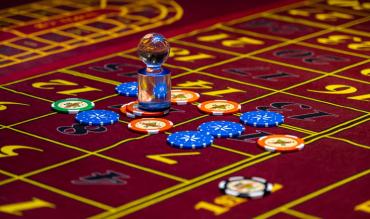

Roulette odds are the chance of any given bet landing, and they're set by the number of green zero pockets on the wheel: a European single-zero wheel carries a 2.70% house edge, while an American double-zero wheel pushes that to 5.26%.
This guide breaks down the odds and payouts for every common bet, with charts comparing both wheels.
Key Takeaways for Roulette Odds
- European wheels return 97.30% to players over the long run, against 94.74% on American wheels.
- Standard bets share the same house edge on a given wheel; "best roulette bets" usually means lower-volatility wagers like even-money and dozens.
- Avoid the American five-number bet (0, 00, 1, 2, 3): at 7.89%, it carries the highest house edge on the table.
- French roulette rules (La Partage or En Prison), when available, reduce the house edge on even-money bets to about 1.35%.
Roulette Odds Explained: American vs European
Roulette odds are defined by the number of green zero pockets on the wheel. Every other pocket is the same size and equally likely to catch the ball, so the zeros are the only structural difference between one wheel and another.
- American roulette (double-zero wheel): 38 pockets, numbers 1-36 plus 0 and 00.
- European roulette (single-zero wheel): 37 pockets, numbers 1-36 plus a single 0.
That one extra pocket is the whole difference between the two games. Payouts are identical on both wheels, so what changes is how often those payouts land.
If this article interests you, also explore how to play roulette.
Roulette House Edge Comparison
The house edge is the share of every wager the casino expects to keep over the long run, and on roulette it comes directly from the zero count.
- European roulette (single-zero): 2.70% house edge, 97.30% RTP.
- American roulette (double-zero): 5.26% house edge, 94.74% RTP.
In plain terms, American roulette costs about 5.26 units per 100 units wagered, while European roulette costs about 2.70 units per 100 units wagered.
French Roulette Rules: La Partage and En Prison
French roulette uses the same single-zero wheel as European roulette, but adds two rules that apply only to even-money bets when the ball lands on zero.
La Partage returns half your even-money stake immediately when zero hits. En Prison locks the bet for one further spin instead, and returns it in full if that next spin wins. Both cut the house edge on even-money bets from 2.70% to about 1.35%, the lowest edge available on any standard roulette wager.
Neither rule applies to inside bets, so a straight-up number still carries the full 2.70% edge on a French table. Tables that advertise French rules also vary in which one they use, and a few offer both, so it's worth checking the table rules before you sit down.
How House Edge Impacts Your Bets
Roulette payouts are set slightly below true probability, creating the house edge.
Take a straight-up bet, which covers one number. On an American wheel, your chance of winning is 1 in 38 (2.63%), and 37 of the 38 pockets lose, so the true odds are 37 to 1. The casino pays 35 to 1. That two-unit gap is the 5.26% edge.
The same calculation on a European wheel gives you 1 in 37 (2.70%) with true odds of 36 to 1, again paid at 35 to 1. The gap narrows to a single unit, which is why the edge falls to 2.70%.
Bottom line: payouts never perfectly match probability, ensuring the house advantage.
Roulette Odds Chart: Common Bets
Use this roulette odds chart to compare payouts and probabilities for common bets:
Roulette Odds Chart
| Bets | Payout | Odds – American Roulette | Odds – European Roulette |
|---|---|---|---|
| Even | 1:1 | 47.37% | 48.6% |
| Odd | 1:1 | 46.37% | 48.6% |
| Red | 1:1 | 46.37% | 48.6% |
| Black | 1:1 | 46.37% | 48.6% |
| 1-18 | 1:1 | 46.37% | 48.6% |
| 19-36 | 1:1 | 46.37% | 48.6% |
| 1-12 | 2:1 | 31.58% | 32.4% |
| 13-24 | 2:1 | 31.58% | 32.4% |
| 25-36 | 2:1 | 31.58% | 32.4% |
| Single Number | 35:1 | 2.63% | 2.7% |
| Combination of 2 Numbers | 17:1 | 5.26% | 5.4% |
| Combination of 3 Numbers | 11:1 | 7.89% | 8.1% |
| Combination of 4 Numbers | 8:1 | 10.53% | 10.8% |
| Combination of 6 Numbers | 5:1 | 15.79% | 16.2% |
| Combination of 0, 00, 1, 2, 3 | 6:1 | 13.16% | NA |
Try European roulette for better odds!
Short‑Term vs Long‑Term Results
Roulette outcomes are volatile in the short term, but over many spins, results align with mathematical odds. The house edge remains constant and never disappears.
Best Roulette Bets: What the Odds Say
Roulette payouts are structured so the house edge is always built in. On the same wheel, most bets carry the same expected loss. What changes is how often you win and how volatile your bankroll feels along the way. Here are some roulette tips:
- Play European roulette (single-zero) whenever possible.
- For steadier results, choose outside bets (red/black, odd/even, 1-18, 19-36) or dozens/columns.
- Avoid the American 5-number bet (0, 00, 1, 2, 3), the only wager on the table with a house edge above 5.26%.
- Look for French tables offering La Partage or En Prison, which take the edge on even-money bets down to about 1.35%.
Quick Reference: Best Roulette Bets by Probability
| Bet | Payout | Win probability: European | Win probability: American |
| Red/Black (or Odd/Even) | 1:1 | 48.65% | 47.37% |
| 1–18 or 19–36 | 1:1 | 48.65% | 47.37% |
| Dozen or Column | 2:1 | 32.43% | 31.58% |
| Six line (6 numbers) | 5:1 | 16.22% | 15.79% |
Safe Roulette Strategies for Beginners
Many beginners ask: "What are safe roulette strategies for beginners?"
The safest approach is to focus on outside bets such as red/black, odd/even, or 1-18/19-36. These bets win nearly half the time, provide even-money payouts, and reduce volatility compared to single-number wagers.
Choosing a European single-zero wheel further improves your odds, lowering the house edge to 2.70%.
Conclusion: Choosing the Best Roulette Odds
Before you pick a table at any online casino, check the wheel first: a single-zero European wheel always beats the American double-zero on odds alone.
Avoid high-edge bets such as the American five-number wager, and use the charts above to select bets that match your risk level and playing style.
Roulette Odds FAQs
What is the house edge in American roulette?
American roulette has a 5.26% house edge due to two zero pockets on a 38-pocket wheel.
What is the house edge in European roulette?
European roulette has a 2.70% house edge on a 37-pocket wheel with a single zero.
Which roulette wheel offers better odds?
European roulette odds are better because the single-zero wheel reduces the house edge to 2.70%.
Do any roulette bets have better odds than others?
Most bets on the same wheel carry an identical house edge. The one exception is the American five-number bet (0, 00, 1, 2, 3), which pays 6:1 and carries a 7.89% house edge, roughly half again as much as every other bet on the wheel.
What are the roulette odds of hitting a single number?
A straight-up bet wins 1/37 (2.7%) on European roulette and 1/38 (2.63%) on American roulette.
Originally published in 2016 and updated in 2026 by Frederico Pereira
