

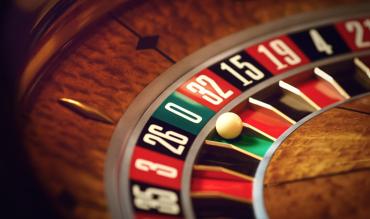

Every roulette wheel has at least one green pocket, and that pocket is where the casino's edge comes from.
On a European single-zero wheel, zero pays 35 to 1 on a straight-up bet and lands with a probability of 1 in 37 (2.70%). The American version adds a second green pocket (00), pushing that combined probability to 2 in 38 (5.26%) while keeping the same 35 to 1 payout.
That gap – true probability versus payout – is the house edge in its simplest form. Fewer green pockets mean a lower edge and a better return for the player. Add La Partage on a single-zero wheel and the edge falls further to 1.35%, the lowest you will find in standard roulette.
Green Zero Payout Odds
The green zero pays 35 to 1 on a straight-up bet – the same payout odds as every other single number on the wheel. It does not pay a premium for being the house edge pocket. A straight-up bet on 17, 32, or zero all return 35 to 1; the difference is purely in probability, which varies by wheel format.
On a European wheel, zero lands 1 in 37 spins (2.70%). On an American wheel, each green pocket lands 1 in 38 spins (2.63% individually). The payout never changes, but the odds do.
To avoid becoming a zero chaser, it is worth noting that zero outcomes have no greater chance of occurring than any other numbered pocket on the wheel. Green stands out visually, and it’s easy to attribute significance to a colour that keeps costing you, but it carries no special statistical weight.
House Edge: Single, Double and Triple Zero Compared
The number of green pockets on a wheel is the single biggest variable in roulette house edge. Payout odds remain fixed at 35 to 1 across all formats, so the edge is created by the pocket count alone.
Wheel Format | Green Zero Pockets | Total Pockets | House Edge | With La Partage / Surrender |
European (single zero) | 1 [0] | 37 | 2.70% | 1.35% |
American (double zero) | 2 [0, 00] | 38 | 5.26% | 2.63% |
Triple zero | 3 [0, 00, 000] | 39 | 7.69% | - |
Single-zero wheels are standard across European land-based casinos and most online casinos. Double and triple zero tables are common in American casinos and tend to attract newer players partly because minimum bet sizes are often lower.
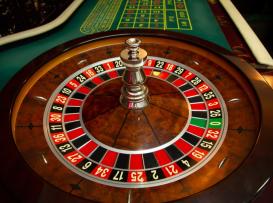
The trade-off is a house edge that is nearly double (or, in the triple-zero case, nearly triple) the European version. If you have a choice, always select a single-zero wheel.
How to Bet on Zero: Jeu Zéro
Beyond a straight-up bet on the green pocket itself, there is a specific call bet built around the zero: Jeu Zéro, or "zero game." It covers the green zero and six neighbouring numbers on the wheel (12, 35, 3, 26, 0, 32 and 15) using four chips placed as follows:
- One chip straight up on 26
- One chip split covering 0–3
- One chip split covering 12–15
- One chip split covering 32–35
Jeu Zéro is placed on the racetrack betting area of the table. In land-based casinos, players call the bet and croupiers place it; in online casinos, players can place it directly on the racetrack layout.
It is a useful option for players who want broader coverage of the zero neighbourhood without committing to the larger Voisins du Zéro call bet.
Using Green Zero as a Timing Marker
For some experienced players, the green pocket serves a purpose beyond the bet itself – it's a timing marker. The technique works like this: you fix your gaze on the far side of the wheel and wait for the green zero to pass.
That's your reference point. While it goes by, you're already tracking the ball in your peripheral vision, reading how fast it's slowing. From that, you estimate how many revolutions it has left before it drops off the track and judge where on the wheel it's likely to land.
The window to act is tight. The goal is to get bets down (typically call bets like Voisins du Zéro, Tiers du Cylindre, Orphelins, or Neighbour bets) covering that estimated zone before the croupier closes the table.
In land-based casinos, players move chips near the croupier when calling bets because only croupiers can place bets on the racetrack. In online casinos, players can place their own bets directly.
This is a skill that improves with practice and relies on estimating ball revolutions and wheel speed rather than on intuition alone.
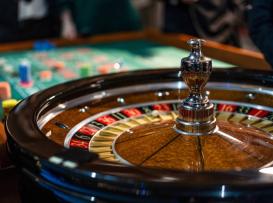
If you correctly predict the area the ball will settle in, the advantage can be significant, although modern wheels increasingly incorporate ball deflectors and anti-prediction design features that make the technique harder to apply consistently.
La Partage and the Surrender Rule
La Partage is the most valuable of the roulette rules for even-money bettors. When it is in play on a single-zero wheel, the house edge drops from 2.70% to 1.35%, the lowest available in standard roulette.
The rule applies when zero is the outcome and there are active bets on any of the six even-money outside chances: Red/Black, Even/Odd, or Low/High (1–18 and 19–36). Instead of losing the full stake, the player loses only half. A $50 bet on Red, for example, returns $25 when zero lands.
The equivalent rule in double-zero American roulette is called Surrender, and it works identically: half the stake is returned on any even-money bet when zero or double-zero lands.
It reduces the American roulette house edge from 5.26% to 2.63%. This arrangement is most commonly found in Atlantic City and is not universal across American casinos or online platforms, though.
La Partage is found primarily in European casinos, both land-based and online, but it does not apply universally even on single-zero games.
Some progressive jackpot formats and electronic roulette terminals operate without it, in which case all even-money bets lose in full when zero occurs. If you are betting on the even-money chances, always check whether La Partage is in play before choosing your table.
Green Zero in Roulette: Key Takeaways
- European single-zero roulette offers a 2.70% house edge – the best standard format available.
- With La Partage on even-money bets, that edge drops to 1.35%.
- American double-zero roulette runs at 5.26%, or 2.63% with the Surrender rule.
- Triple-zero wheels should be avoided wherever possible.
- Jeu Zéro provides structured coverage of the zero neighbourhood for players who want to bet around the pocket rather than directly on it.
Frequently Asked Questions
What is the difference between 0 and 00 in roulette?
The single zero (0) appears on European wheels, giving the casino a house edge of 2.70%. The double zero (00) is an extra green pocket found only on American wheels, raising the house edge to 5.26%. Both pay 35 to 1 on a straight-up bet, but the additional pocket worsens the true odds on every bet on the table.
What happens to my bet when zero lands?
A straight-up bet on zero wins at 35 to 1. Any other straight-up bet loses in full. Even-money outside bets (Red/Black, Even/Odd, Low/High) also lose in full, unless La Partage is in play, in which case half the stake is returned. All other bets lose regardless.
Is it worth betting on zero in roulette?
A straight-up bet on zero pays 35 to 1 but lands with a probability of 1 in 37 on a European wheel, identical to every other number. The expected value is the same as any other straight-up bet on the table. The payout looks attractive, but zero holds no statistical advantage over any other pocket.
